10% off all print pairs and print sets. Shop today and make your walls unforgettable.
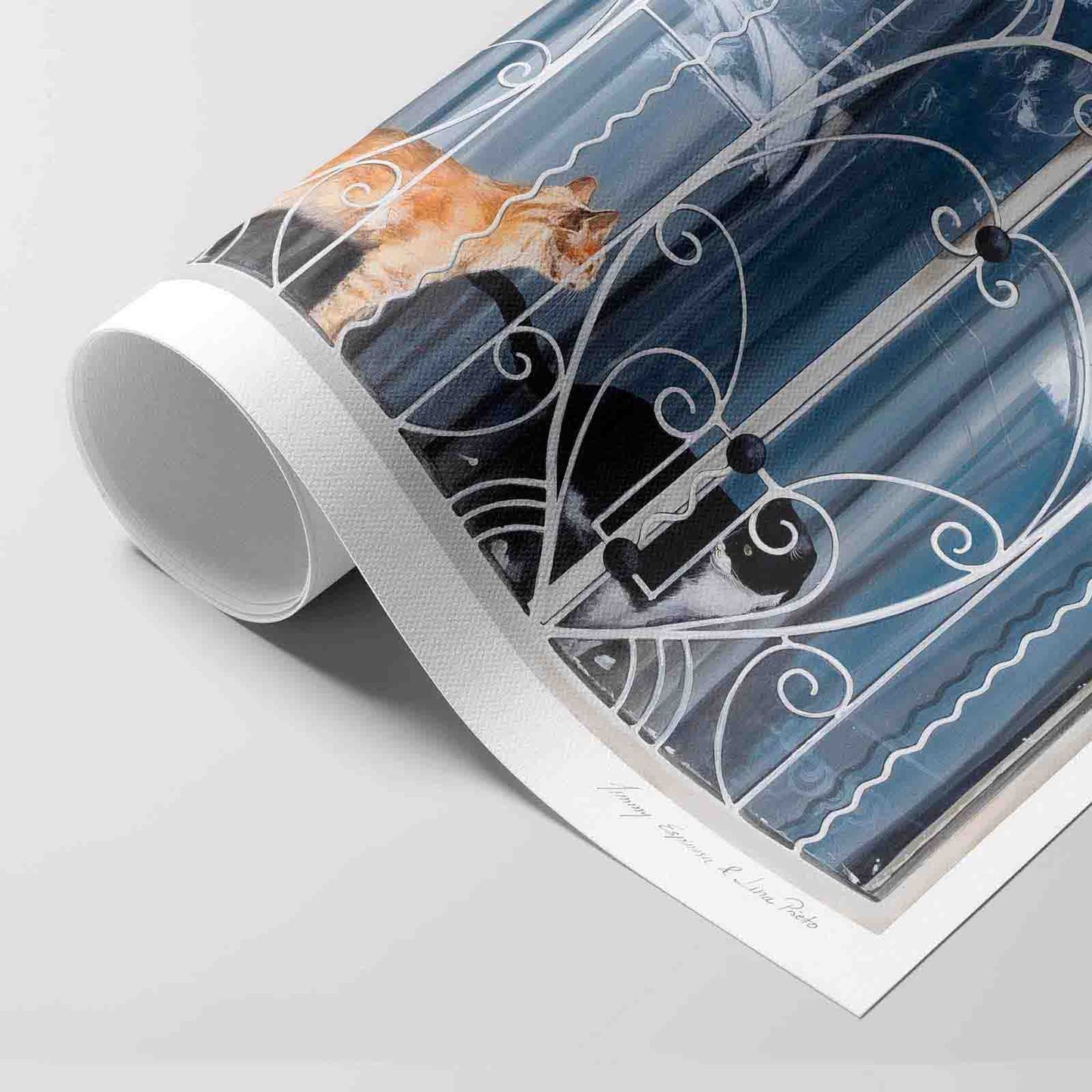
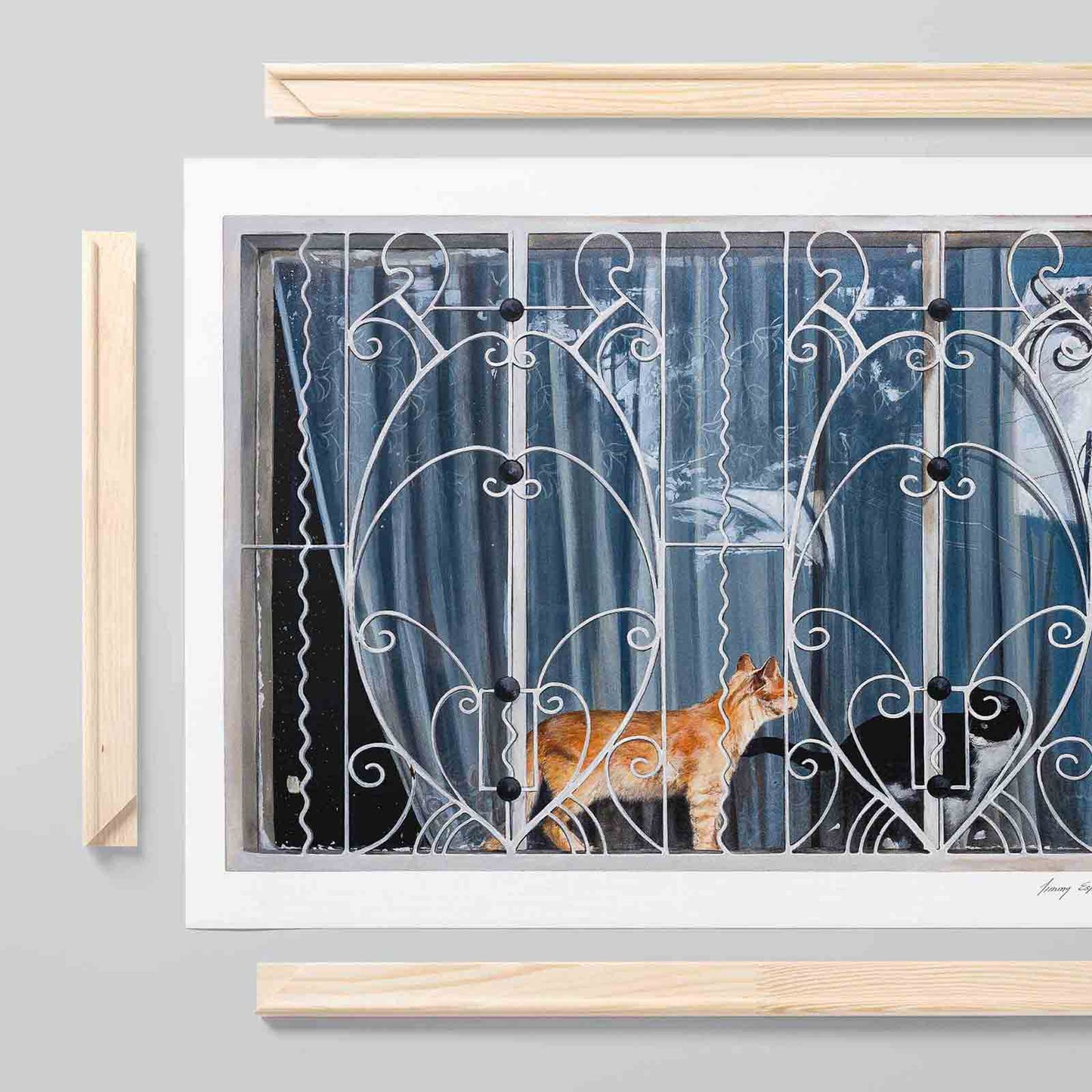
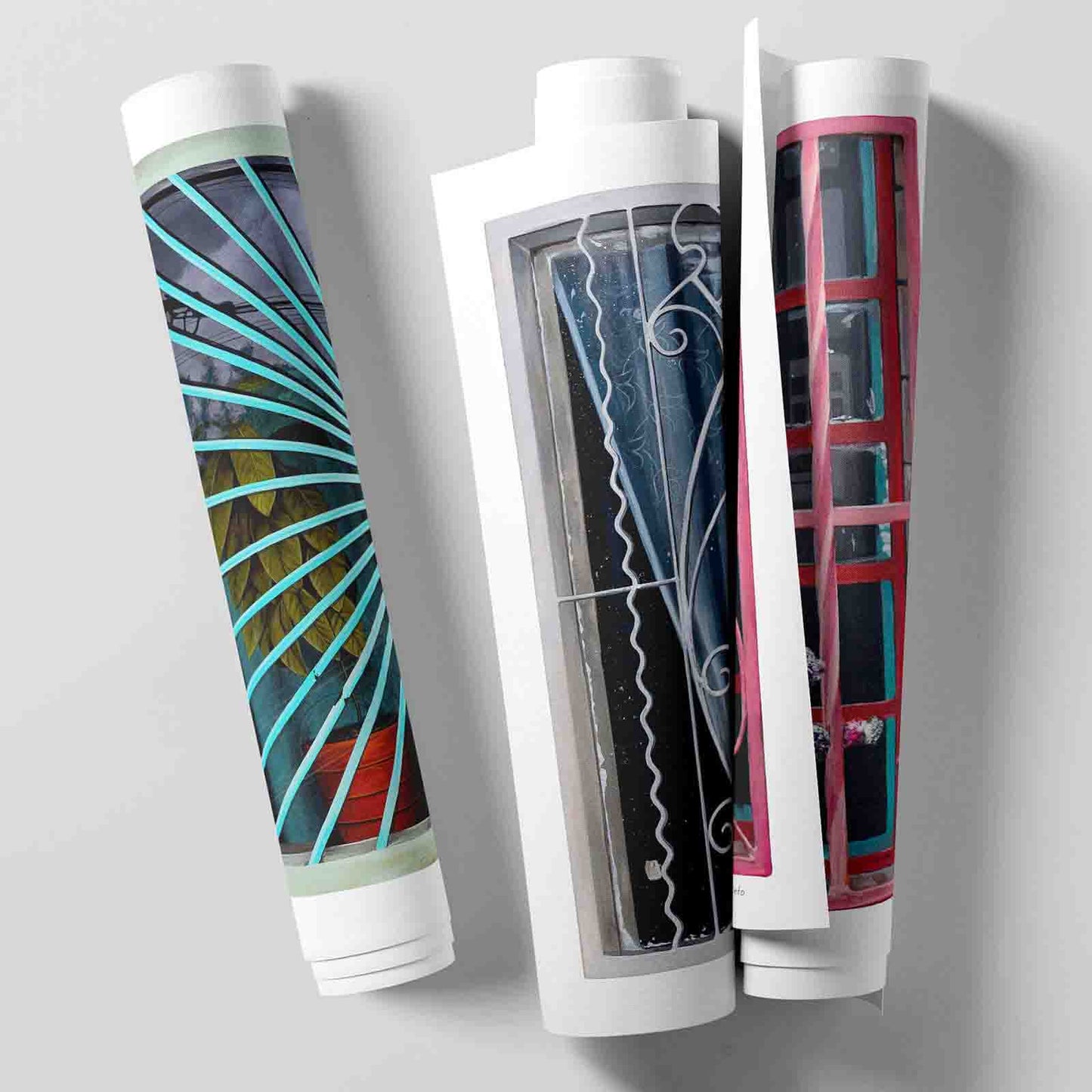
In the everyday details of Bogotá’s streets, windows and doorways lies a living archive of stories. Colombian artists Lina Prieto and Jimmy Espinosa, also known as creative duo J&L Constructores, have made it their mission to capture these stories in painting. Their work translates overlooked urban elements into powerful visual narratives, now available as collectable art prints for lovers of contemporary Latin American art.
In this interview, we dive into their creative journey, their celebrated Umbrales (Thresholds) series, and the real human lives reflected in their work.

Street Art, Urban Life and the City as Inspiration
Studio Parga: Your work is often described as street art focused on urban scenes. When did your fascination with city life begin?
Lina Prieto: For me, it started very early on in life. I’ve lived in almost every corner of Bogotá, north, south, centre…you name it, I’ve lived there. Travelling to school and university every day made me aware of how each area has its own rhythm, its own dynamics. And thanks to this exposure to city life, particularly as an observer, I became fascinated by how territories can flip and change from one street to the next.
I’ve always been an observer: I notice aesthetics, people and especially economic and social contrasts across the city. Over time, this curiosity deepened as I began to connect with people outside my immediate friendship and family circles. Listening to their stories made me realise that we’re all part of a shared urban memory, and that this memory forms our collective identity as a city.
Jimmy Espinosa: I lived in Bogotá’s city centre for about 40 years, almost my whole life. Everything I needed was there: school, university, the hospital where my mum worked, the market, San Victorino where I buy my art materials. I never needed to leave.
But all that changed when I started teaching in different communities across Bogotá. Moving through these neighbourhoods expanded my view of the city and has deeply influenced my, and indeed our art. Above all else, I began to understand how vulnerable families survive through informal work, be it as cleaners or street hawkers. It’s incredible to see how hustle culture has been alive in these neighbourhoods long before it became a fashionable word and lifestyle among more privileged communities.

The Umbrales Project: Windows as Stories
SP: Your series Umbrales focuses on windows across Bogotá. How did this project begin?
Jimmy: Before Umbrales, we worked on two projects. Trayectos involved repainting bus route signs using our own interpretations of the neighbourhoods they passed through, and Obra en la Vía reimagined road signs, filling them with everyday street scenes.
As we researched different routes and neighbourhoods for these two projects, we began to notice Bogotá’s windows and their window grilles. Each one seemed to reflect a certain human condition; each had its own signs of wear and tear that told a story. Each colour, each repair, they all add up to give these windows a history and a personality. That’s when we realised these windows could tell stories. And Umbrales was born from this initial observation.
SP: How do you decide which windows to paint?
Lina: We’re drawn to subtle human details. Not just visual beauty, but emotional depth. Each window hints at who lives behind it; the dreams, expectations and struggles of the people inside. An umbral, or threshold, invites empathy. It’s about stepping into someone else’s reality, albeit briefly.

Connecting With the People Behind the Paintings
SP: Do you interact with the residents whose homes you paint?
Jimmy: Not always. Some of the homes we paint are abandoned or sealed. But when people do come out, they’re often concerned about their own safety and security. They want to know why a stranger is photographing their windows and doors!
But once we explain that we’re working on an art project and that their home caught our attention because of its beauty or design, everything changes. They invite us in and tell us their personal stories. Suddenly, mum appears, the dog, the kids, the cousins...and they share, with pride, how they built their home.
It’s moving because they feel seen, like their hard work is being acknowledged by someone.

SP: Do these paintings reflect a wider collective reality?
Lina: Absolutely. Our goal is to create an archive of Bogotá, a visual memory if you like. In five or twenty years, many of these windows won’t exist. Each painting captures how families shape their homes according to their means, tastes and needs. We even include QR codes in this project that link to Google Maps so viewers can see how each location or window has changed over time. In essence, the project is a dialogue between traditional painting and modern technology, between permanence and transformation.
Artistic Process and Scale
SP: Are the paintings created to scale?
Lina: Most of them, yes. Some works focus on details or fragments, but the majority are painted to scale to preserve authenticity.

Stories Behind the Art Prints
SP: Can you share the story behind the art print Sí. Hay Helados?
Lina: Sí. Hay Helados is a portrait of a window in the Lourdes neighbourhood, near central Bogotá. I was teaching there and noticed a sign advertising ice cream for just 400 pesos (about 10 US cents). And I couldn’t believe a family could survive on selling ice cream so cheaply.
So I took a picture and we painted the window. A year later, the window was gone, it had been painted black. The business had ended. But the painting preserves that moment in time when it existed, that effort to make ends meet.
Jimmy: It’s a powerful reminder of resilience. Any noble effort, however small it may seem, is always valid.
SP: Did you ever try the ice cream?
Jimmy: No, the house was closed when we visited, but perhaps this adds another layer to the mystery. Was the sign itself decades old? That said, at the end the day this isn’t important since the sign and the window still reflect how people strive to survive in vulnerable neighbourhoods.

SP: What’s the story behind the artwork Portal?
Jimmy: I spotted this window on the way to teach art classes at the infamous La Picota prison. I caught a glimpse of it for the first time from an Uber and I just couldn’t forget about it, the colours, the shapes…But I had a problem, I couldn’t find it again!
I searched for days, riding my bike through dangerous areas I perhaps shouldn’t have been in. Until, finally! I found it. And, what’s more, I almost got run over by a taxi while photographing it. That taxi even appears in a reflection in the painting!

From Individual Artists to a Creative Duo
SP: How did you meet?
Lina: We studied at the same university, but at different times. We started talking while I was preparing for my graduate show and Jimmy was sourcing materials for a new project. Art brought us together and eventually we became a couple.
SP: What inspired you to work together as J&L Constructores?
Jimmy: Our first collaboration happened in a gallery owned by a French collector. He noticed shared themes in our work and suggested we collaborate on some new pieces. We’ve always been very open-minded so we decided to give it a go and discovered we loved working as a unit. We loved that what we made wasn’t ‘his work’ or ‘my work’, but shared. It was more about the process of collaboration than the final painting.

Creative Process and Collaboration
SP: How do you divide the workload?
Lina: There’s no strict division. We start with an idea, a concept, and then we walk the length and breadth of the city researching our idea. Our research always happens on the streets.
Back in the studio, with our ideas now fully formed and a creative direction settled on, either of us can start a painting. We work on multiple pieces simultaneously and swap between works when needed. But the final decision as to whether a painting is finished is always taken together.
SP: What’s the secret to a healthy creative partnership?
Lina: Trust. We believe in each other and we grow together. That’s why we’re called J&L Constructores, because we operate like one worker building something brick by brick.
Jimmy: We make space for reflection, dialogue and shared experiences. We base our partnership on the belief that we’re both still evolving, just like the city we paint.
Conclusion: Why J&L Constructores Matter
J&L Constructores don’t just paint buildings, they paint lives. Their art prints offer collectors a chance to own a fragment of Bogotá’s soul, preserved in colour, texture and story. For anyone passionate about Latin American street art, urban narratives or meaningful contemporary art, their work is a window worth opening.
FAQs About J&L Constructores
1. Who are J&L Constructores?
They’re a Colombian art duo formed by artists Lina Prieto and Jimmy Espinosa and are known for urban-inspired paintings rooted in Bogotá’s streets.
2. What is the Umbrales series about?
Umbrales focuses on windows and doors as symbols of human stories, memory and collective identity.
3. Are J&L Constructores’ works available as art prints?
Yes, selected works are available as high-quality art prints on the Studio Parga website and are ideal for collectors of Latin American contemporary art.
4. Why do they include QR codes in their paintings?
QR codes link to Google Maps locations, allowing viewers to explore how their windows have changed over time.
5. What makes their work unique?
Their combination of traditional painting, urban research, human connection and social storytelling sets them apart in contemporary street art.