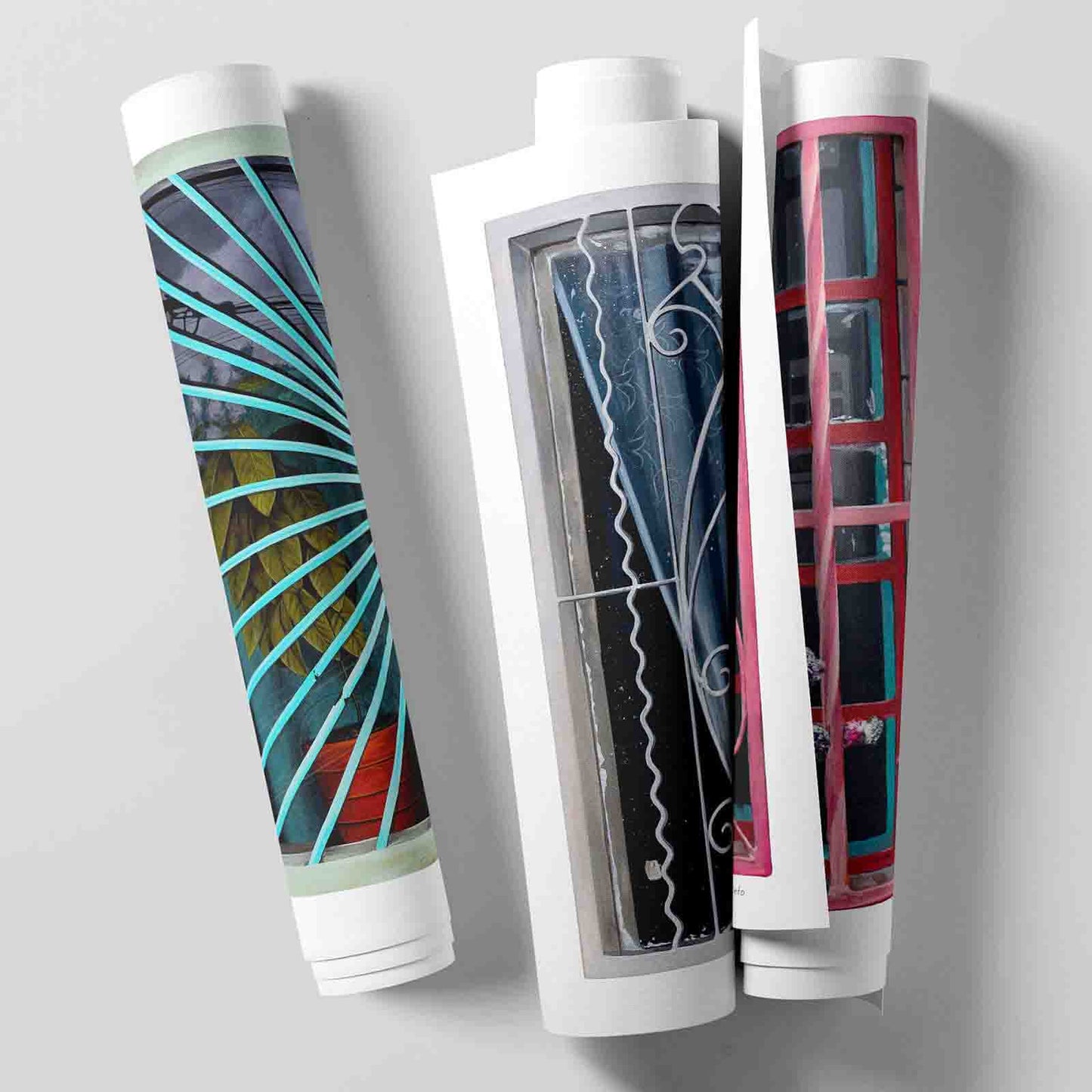

10% off all print pairs and print sets. Shop today and make your walls unforgettable.
Colombian artist Juana Gaviria is a multidisciplinary creative whose practice spans abstract art, design, architecture and furniture. Educated at Universidad de Los Andes in Bogotá and the Rhode Island School of Design in the US, Gaviria began her career as an architect in California before returning to Colombia to establish her own studio.
Deeply influenced by Bauhaus principles, minimalism and the pursuit of order, Gaviria’s abstract works offer moments of calm within the constant noise of Bogotá. In this in-depth Q&A interview, she reflects on intuition, colour, creative freedom, and what it truly means to sustain a life in art.

From Architecture to Abstract Art
Studio Parga: You have a strong background in architecture and design. What led you to focus on art full-time?
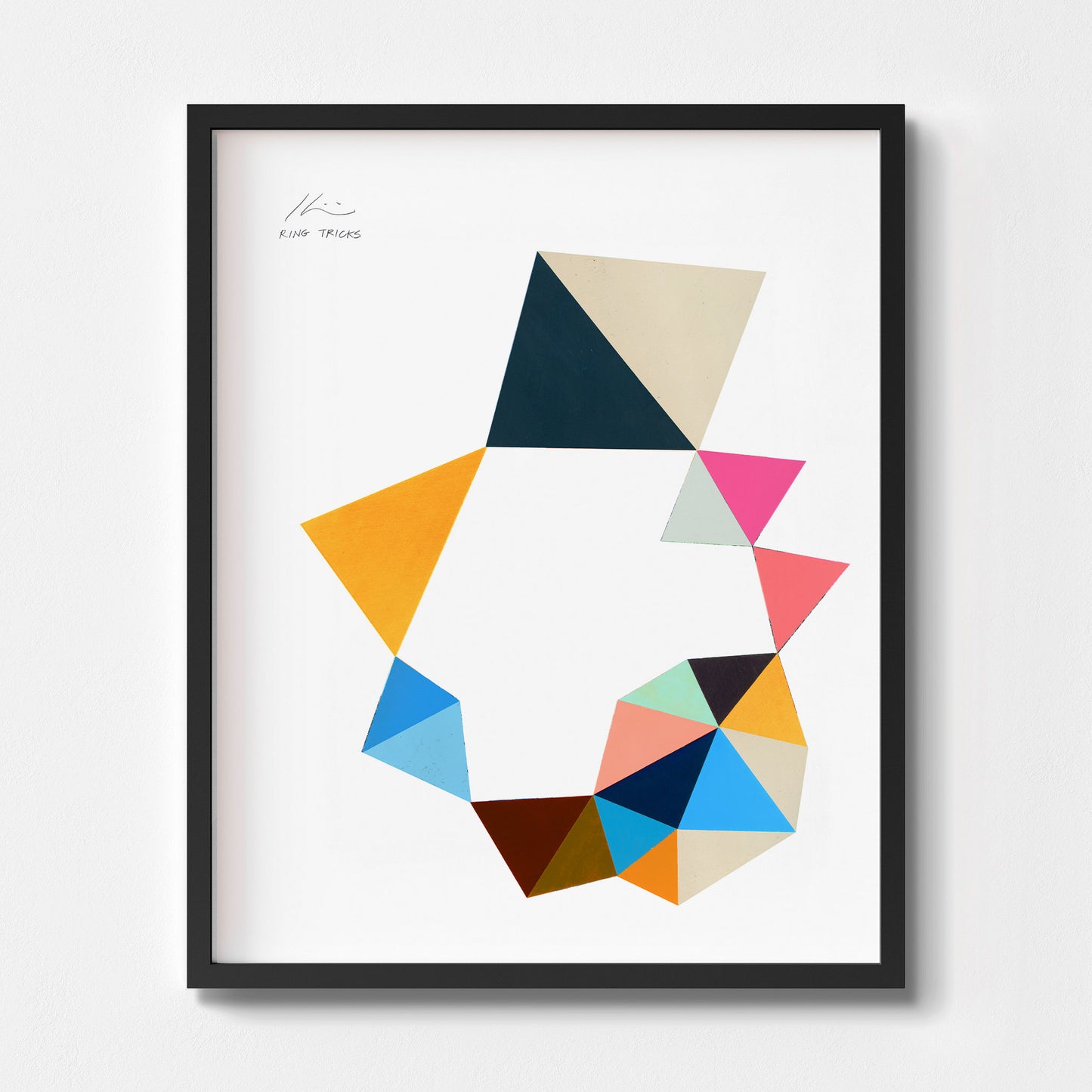
Juana Gaviria: From a very young age, I thought I would become a designer. And I really tried to be one. But I quickly realised I needed much more spontaneity in my creative process. Design and architecture felt too formal and too rigid for me. When I paint now, I don’t plan. I sit down and let the piece emerge as I work. I don’t impose upon it the idea of one particular, final image. Ideas, shapes and themes begin to appear as I progress and I follow their lead. I might be arranging forms, say triangles, and suddenly take a step back and think, this feels like a guacamaya (macaw). It's only then that I'll start to shape the image around this idea. Perhaps in a way, I still 'design' my art. But it comes from a place of intuition. And I give abstract images names because naming them gives them structure and coherence.
Colour as Instinct and Identity
SP: Colour plays a powerful role in your work. Is your palette intuitive or controlled?
JG: I couldn’t live in a black-and-white world. I feel like a hummingbird drawn to colour. I notice colour combinations constantly, especially when walking through the city, and I am genuinely excited by them. I fact, I think of colour as one of my superpowers: I instinctively know which colours work together. At the same time, this intuitive approach has led me, quite naturally, to develop a more defined palette. Blue and grey always appear in my work, and a pop of yellow-orange. Always. I struggle with pure primary colours, especially red. Red feels too aggressive, too combative. But blue? Blue is everything to me. Without blue, I honestly don’t know what my work would be. It’s my colour.

Intuition vs Structure in the Creative Process
SP: Do you see your intuitive approach to art changing in the future?
JG: Yes I do, but only if it happens naturally and truly serves the work. I’ve always worked intuitively, but recently I’ve become very interested in Native American design. This isn’t about trends. It’s something deeply personal. Growing up, there was a sofa in my home with Native American patterns, and this image has stayed with me subconsciously into adulthood. One day, I decided to translate these patterns into a painting, and ever since I’ve been practicing drawing them, meticulously studying how they’re constructed. This has introduced more structure into my work, more order. I’m not sure where this exploration will lead, but right now, I need to understand these patterns. They are deeply embedded in American culture, and as someone who is American on my mother’s side and spends a lot of time in the US, I feel compelled to engage with them.
Art as a Response to Bogotá
SP: How does your environment influence your work, particularly living in Bogotá?
JG: Bogotá is chaotic. It’s noisy, dirty, disorganised; there’s so much happening all at once. I also have ADHD, which makes it difficult for me to feel centred. My artistic practice helps me with regulation. It’s a way to create order when everything feels overwhelming. My mind works in waves, emotionally I can be very up and down, and art helps me to stabilise these waves. When I work, I disconnect. I put on my headphones and focus on very simple things: planes of colour, shapes, balance. I create a kind of visual refuge. My background in architecture and Bauhaus design is very present here. The Bauhaus was about coherence, clarity and functionality, about creating something that is both beautiful and ordered. It's this philosophy that still guides me today.

Paintings vs Architectural Wall Sculptures
SP: Are your architectural reliefs created in the same intuitive way as your paintings?
JG: Not entirely. The wall sculptures and architectural reliefs require more structure, especially at the beginning. These are the works that often go to art fairs like ArtBo, and they tend to be more collectable. They’re not my favourite works to make, though. My daily joy comes from painting intuitively in the studio. That said, even in these structured pieces, intuition returns. Once the pieces come back from being cut and assembled, I solve aesthetic issues, especially colour choices, instinctively. My emotional state always influences the final result. If I’m feeling joyful, the colours might be more vivid. If I’ve just returned from a calm trip, the palette may soften. My emotions are always present in the final outcome.

Advice for Emerging Artists
SP: What advice would you give to young artists starting their careers?
JG: Don’t think about what other people are making. Be honest to yourself and create what truly comes from you. And understand this: being an artist is a marathon. It’s full of frustration, confusion and self-doubt. You will feel defeated many times, but you must continue. Persistence is everything.
The Realities of an Artistic Life
SP: Is persistence the hardest part of being an artist?
JG: Yes, I'd say so, along with the imbalance. You put into it far more than you receive. Exhibiting is hard for me. You open yourself up completely to criticism, and that’s emotionally demanding. The solitude is also challenging. Being an artist means spending a huge amount of time alone, working without guarantees or steady rewards. Consistency is the hardest thing in this, showing up every day despite the uncertainty.

The Rewards of Making Art
SP: What's the most gratifying thing about being an artist?
JG: When someone chooses to live with your work. That’s where the magic lies. There’s a silent communication that happens between the artist and the collector. A shared understanding. No other experience compares to this feeling.
Why Art Matters in the Home
SP: Why do you think it’s important to live with art?
JG: Art is a portal to the places, people and memories that matter to each of us. Every artwork carries a memory of where you saw it, why it moved you and what you were feeling at that moment in time. Art helps us tell our own story. It grounds us as individuals and connects us as a community. This is why it’s so important for us to fill our lives with art.

Discover More